Thursday, 28 September 2017

Go smart, go change, go innovate (Go-Jek) #IMMOOC

Why is innovation in education so crucial today? #IMMOOC


I am lucky enough to live in Indonesia, in Jakarta, which is a huge sprawling megatropolis. The streets are crowded and chaotic to the untrained eye. Streets built for feet and wheeled carts, now entertain all kinds of vehicles, signposts and street names sometimes exist and it’s a scary place to navigate and get around.

Image result for o-jek signTo meet the need of the wary traveller, leather skinned men hung around the street corners, chain-smoking cigarettes. Next to them is their bike which has a piece of cardboard hanging off, with ‘O-Jek’ handwritten on it.
Sometimes one of these motorbike taxis was there when you needed it. Often there were many and most only seemed to do one or two ‘jobs’ a day, for a negotiated price.


Why am I telling you this? Well because O-Jeks in their previous form have almost entirely disappeared in the space of two years, and I think this could be an analogy of what could happen to our current school system.
In Jakarta, a disruptor called ‘Go-Jek” entered the market, matched up customers with drivers through an APP and charged a fraction of negotiated prices. Go-Jek was quickly followed by Grab Bike and Uber and the old way was lost.

Image result for o-jek


There are plenty of disruptors on the horizon for education, a few are already making headway. Plenty have been written about such things as open courses, MOOCs and the like. Video is playing a huge role too. On top of that the upper echelons of our academic systems are in danger of pricing themselves out of the market for the masses.
The needs of our learners are changing. The traditional school > college > job pathway is becoming less relevant and less affordable. If our education approaches remain static, outside elements will begin to meet the needs of our learners more effectively. And education as we know it will be in trouble.


I care less about the current institutions of education, but as our learners’ needs change, we have a duty to innovate to meet those needs.

Sunday, 3 September 2017

Knowing what you don't know...

Often the first step to learning, is to know what it is you don’t know. This oft recited phrase is an interesting starting point for someone in my role. As a Learning Technology Coach, I am keenly aware of the amount of learning that is beyond my current sphere of experience. And that amount is constantly growing.

And learning is a resource heavy undertaking. Learning new things takes a lot, particularly for time pressured teachers. Many teachers can be forgiven for deciding either purposefully, or by default, that the mass of technology led learning available is just too big to start delving into. Where to start?

This kind of choice paralysis is a direct result of the overwhelming myriad of options that using technology offers.


Here is where I come in. I can open a window into what you haven’t had time to know, so you can see what the possibilities are. You don’t have to know what you want to do with technology before you ask me. You just have to be willing to look at new opportunities.

I probably don’t know the subject you teach very well and I might not have years of experience teaching the age group you are teaching. But I can ask you what you want to achieve, how you want the students to demonstrate their learning and then narrow those choices facing you. I can suggest or work out workflows that can support your students’ learning and offer suggestions to use technology that may not have occurred you.

Then, when you are keen to give something new a go, I can be there with you so I can learn how this works for your students. While they are learning what you need them to.

That’s how you help me to learn.

Friday, 31 March 2017

So you think you know what is happening in your classroom....

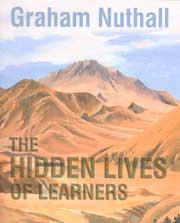
The Hidden Lives of Learners
Graham Nuthall

This is an incredible insight into the workings of the classroom. Recommended to me by @MrDMJWalsh, Nuthall set up microphones and cameras to track each and every interaction and utterance of random students in classes. His team then painstakingly transcribed and analysed each one. Following this Nuthall and his team were able to predict with incredible accuracy exactly what each student would have learnt, and did learn during the observed periods. He explains the huge influence peers have on learning, and the necessary repetition required before real learning happens. Again this pushes back against the current scourge of curricula which are over-crammed with content.

Pros: Incredibly insightful for those who believe they have a handle on what happens in their classroom.

Cons: Unfortunately, Nuthall is no longer with us to explore his findings further.

Friday, 17 March 2017

A book to change your teaching life.....

Learn Like A Pirate

I’d picked up a bit of fuss around this book from folk I follow on Twitter. Initially put off by the title I eventually decided I had to find out what the commotion was about. Paul Solarz (still a class teacher, Grade 5 in the U.S.A.) takes us through his philosophy of handing over the reins of the class to the students. Strewn with practical methods for managing student led classrooms Paul details how you can give the students in your class voice, and leadership, while ensuring that it doesn’t turn into anarchy. The ideas in this book transformed my classroom. Previously my classroom was a teacher led environment where I controlled the organisation of the classroom and had responsibility for all the day to day running. This was transformed as I handed over the organisation of timings, atmosphere, support and target setting to my class. After initial guidance all these things were done with skill and aplomb by my class, allowing me to focus on the timely feedback and support needed to move individuals’ learning forward.
It was exhilarating, rewarding and effective. Students were highly engaged in lessons where they decided how to organise themselves and how to support each other.

Pros: Well organised and written by somebody who walks his talk in the classroom daily. Full of practical real life strategies that reward your bravery with empowered, independent and motivated students.

Cons: I wish I had this book ten years ago. I’m not a big fan of the letters of recommendation from parents, although I realise the job they do, a bit brash for my British sensibilities! Not sure it translates to high school classes and would need to be adapted to younger children, but much would still work.

.

Friday, 3 February 2017

Open by David Price

I had a brilliant break thanks for asking. A number of days of it was sat on a train trundling across Siberia. In that time I read nine books. I was reflecting on how I could use what I had learnt, and how this applied to my life and work. I realised that I’m likely to forget lots and have decided that by writing about them, I will remember the key points, and be able to tip off other folk to some great reads.
So check out my brief reflections, and feel free to get in touch if anything piques your interest.


Open - How we’ll work, live and learn in the future. David Price
This book is a thoroughly believable look at how things could go in the future. Price argues a case that many of the things that hold value in our current world, education, property, energy are going to lose their value due to the spread of ‘openness’ and self organisation. Although I found all interesting, the key one here is knowledge. He discusses how knowledge is becoming free. The premium of having a high academic qualification is diminishing and how learners are cutting out the middlemen of established learning institutes as a physical entity. The explosion of online courses and homeschooling being prime examples.


Pros: Lots of real examples on how these trends are beginning, easy to believe, wake up call for educators and many established investors in traditional markets.

Cons: Makes you feel that it is urgent that established education institutes get on the front foot with this, but I struggle to see how they will. Also, if he is right, then as students have less need to physically attend university, my recent investment in a student apartment doesn’t look too clever.

Monday, 12 September 2016

The Elevator Pitch

www.flickr.com
I've heard this a couple of times, but I can't for the life of me remember exactly where I was at the time. I want to say the story has something to do with Richard Branson, but I could be just making that up.

The ‘elevator pitch’ is how you would explain your rèason d’etré to that critical person you just happen to be sharing an elevator with. And normally in an elevator, you have around thirty seconds or so to do it.

So I have attempted to write out my elevator pitch. How I would explain what I want to achieve in thirty seconds:

Schools don't work for so many people. Many of the most successful people are successful despite their schooling, not because of it. The current trend of standardisation and testing is making things worse. It's narrowing the opportunity for children to find out what they are good at. It's pointless and wasting our human potential.

Instead, I want to shift the focus to a creative, exploratory and innovative experience for students. Allowing them opportunities to find out where their strengths lie, and to follow their passions. Empower students to make a real difference to their world.

I am doing this by disrupting frenetic exam results chasing ‘schooling’ in a positive way. Giving teachers and students the support, opportunity and permission to try different things, to celebrate creative thinking, ingenuity and exploring passions. Join me.

Ok, so I timed myself, it was 33 seconds, and will have to do. This is my current thinking, in 6 months I will possibly have shifted focus, bt at the moment this sums up what I am aiming for.

What’s your 30 second elevator pitch?